
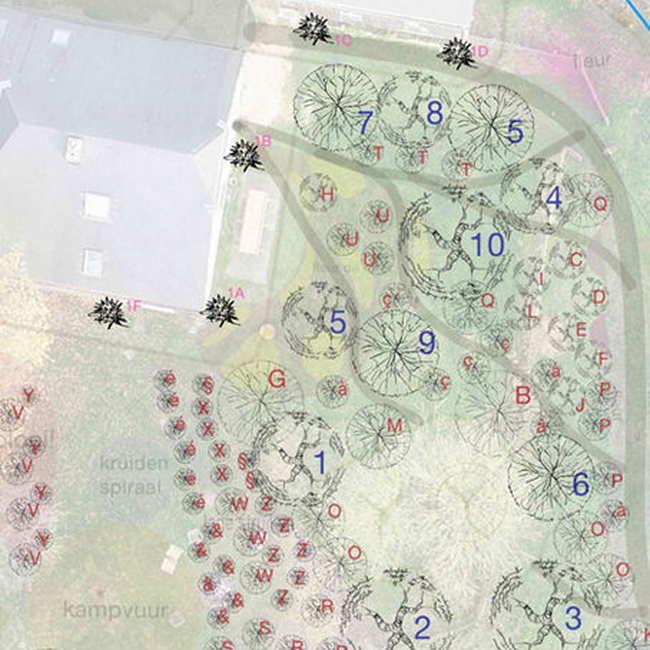
A food forest isn’t just a collection of trees and shrubs. It’s a carefully constructed ecosystem where plants work together and strengthen each other. A good planting plan helps create structure and ensure the right plants are in the right places.
💡 What makes a good planting plan?
A planting plan considers more than just which species to plant. It helps to:
🌳 Layers to utilize – From tall trees to ground cover, each layer has a role to play.
🌀 Understanding structure and evolution – Some trees enrich the soil and are later pruned specifically to make room (accumulation trees).
🍂 Strengthen soil and cycles – Nitrogen fixers, deep rooters and mulched plants improve fertility.
🌞 Use sun and water wisely – The choice of plants is tailored to light, moisture and microclimates.
🔍 The Plant List: An Essential Tool
A plant list is more than just a list of names—it’s a design tool that gives you insight into how plants work together. A good plant list includes, among other things, the name and cultivar of the plant, its ecological function, harvest and flowering time, and so on.
🌱 Dynamics in your design
Plants grow, change, and influence each other. A food forest develops over time—some species support the initial phase as accumulation trees, which don’t necessarily disappear but are often pruned specifically to create space for other plants. A flexible planting list helps you incorporate this dynamic into your design.
✨ From list to living landscape
During our food forest course you will learn how to:
✔ Select plants based on functions and interactions.
✔ Create a planting plan that grows with the system.
✔ Creates combinations that ensure sustainability and productivity.
🌿 Curious how to go from a plant list to a thriving food forest?
Discover in our course how to create a resilient design in which all elements work together.
🔗 Want to know more? Visit our website and start your food forest dream!