
We walk over it every day. Sometimes without realizing it. But beneath our feet—there lives something that makes our lives possible: the soil .
In a healthy food forest, the soil isn’t a dead layer. It’s a living ecosystem where plants, fungi, bacteria, and countless other microorganisms constantly collaborate. What may seem stagnant to us is actually a vibrant network of connection and exchange. And that’s precisely where a landscape’s resilience begins.
AM fungi: the invisible allies in the roots
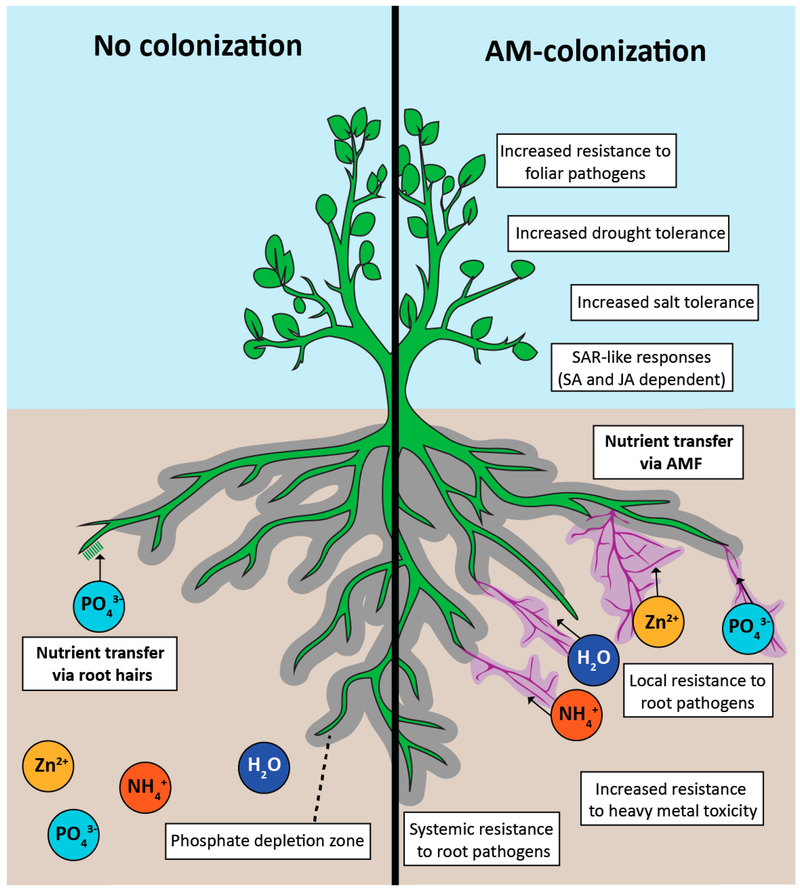
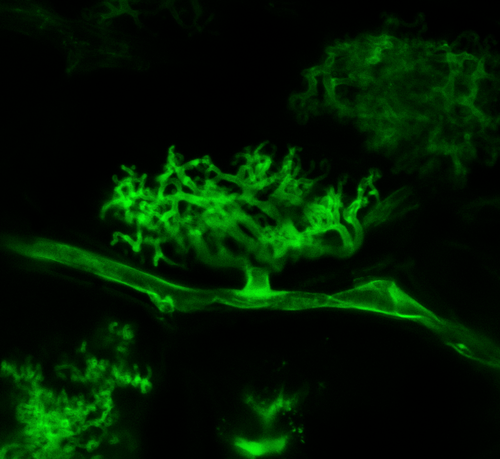
Arbuscular mycorrhizal fungi (AM fungi) live in the root zones of many plants . They are tiny, invisible to the naked eye—but they perform an invaluable task. These fungi penetrate the plant’s roots and form branches (arbuscles) where intensive exchange takes place between plant and fungus.
The fungal threads (hyphae) extend far beyond the roots themselves—up to meters—significantly expanding the plant’s reach. They bring not only water but also hard-to-absorb nutrients like phosphorus, sulfur, magnesium, calcium, copper, and zinc to the root. Substances that would otherwise often remain inaccessible.
Thanks to AM fungi:
- can plants grow on poor soils
- they are more resistant to drought, heat stress and soil pathogens
- they improve their nutrient uptake and photosynthesis
- they gain access to an underground communication system in which they can exchange information with other plants via signal substances: about drought, pests, or the availability of help
This network functions as a kind of sensory extension of the plant — an intelligent system that helps it survive and flourish.
In a food forest we consciously create conditions in which this symbiosis can flourish:
- we feed soil life with organic material (such as mulch, pruning waste and compost)
- we avoid disturbance (so no digging or ploughing)
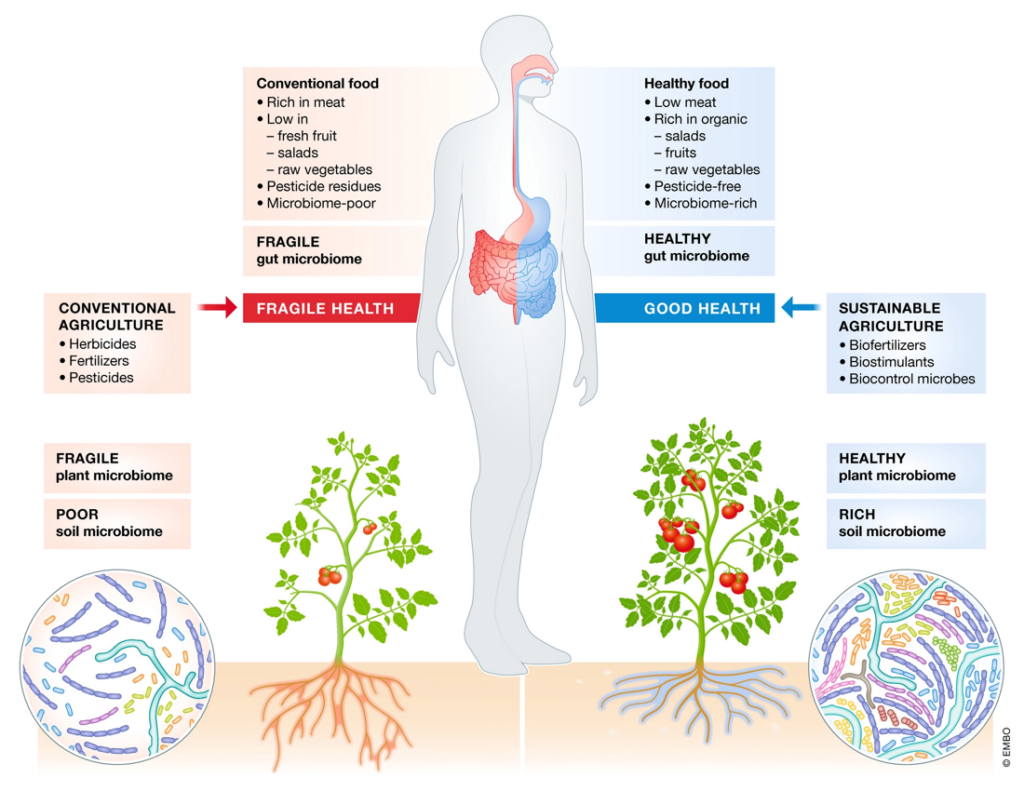
- we do not use pesticides or artificial fertilizers
- and we plant diverse and perennial plants from the start , so that the network can fully develop
Without AM fungi, many plants would literally be left to fend for themselves. With them, a living system of cooperation, resilience, and reciprocity emerges.
EM fungi: the silent allies of trees
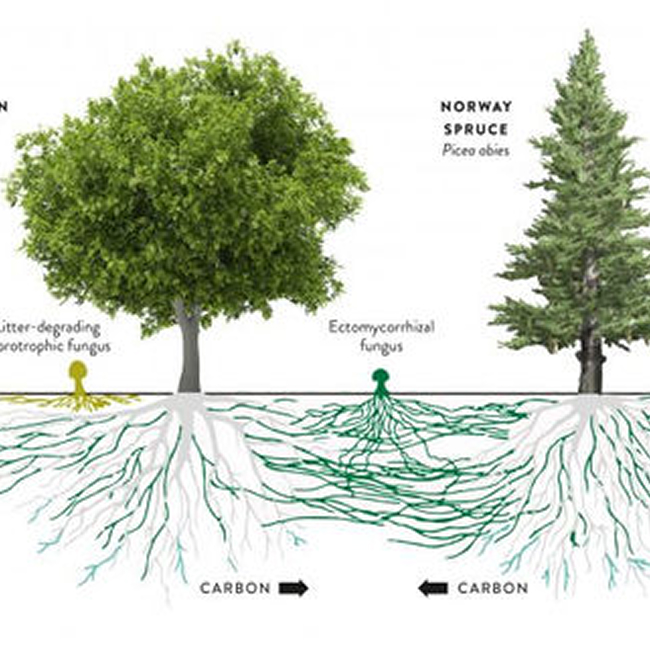
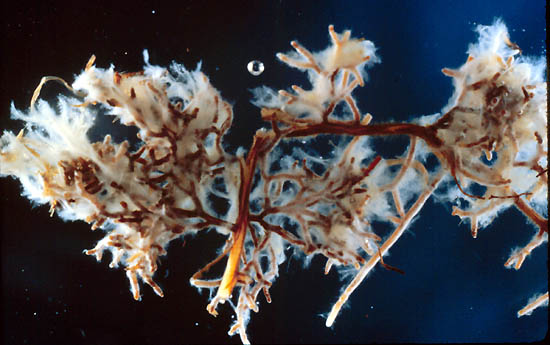
Besides AM fungi, we also know ectomycorrhizae (EM fungi) . These do not live in, but around the roots—primarily of trees such as chestnut, hazel, beech, oak, mulberry, and walnut.
EM fungi build vast networks that connect trees—also known as the wood wide web . They help trees absorb nitrogen and phosphorus, provide protection against diseases, and enable communication between species.
We often recognize their presence by mushrooms that appear above the ground: boletes, russulas, milk caps… Each season they bring their work to light.
Those who want to support EM fungi should choose trees rich in biodiversity, leave leaves and branches, and avoid disturbance. EM networks grow slowly—but build deep, life-sustaining connections.
The soil as a living organism
The soil isn’t an empty container, but a complex community. A healthy soil:
- has an airy, crumbly texture – water and air!
- contains a balanced supply of nutrients
- is full of life: bacteria, fungi, worms, nematodes, protozoa…
A single teaspoon of healthy soil is home to more microorganisms than the number of people on Earth. They break down organic matter, release minerals, and, together with plants, form a living web.
Soil health rests on three pillars:
- Physical : structure, porosity, rootability
- Chemical : nutrient balance, pH, exchange capacity
- Biological : activity and diversity of soil life
Modern microbial testing is helping us understand soil life ever better. We already incorporate this into my work—to work with the soil beneath our feet with greater precision and respect.
What can you do?
Whether you’re starting a food forest or maintaining a small garden, here are three powerful steps:
- Avoid disturbance : so do not dig, plough or mill.
- Keep the soil covered : with mulch or living plants
- Feed diversity : plant a variety of plants and add organic material
A living soil prevents erosion, increases water retention, supports biodiversity, and contributes to climate adaptation and food security.
Read here how you can do this in practice
We often think we make plants grow. But in reality, it’s the soil that sustains us.
Take care of her—and she’ll take care of you. In the projects we develop together, we always pay attention to all the life that happens beneath our feet. This way, we can help your property develop into the best version of itself!