
Stap 1 – Vooronderzoek van je terrein 🌿
A successful food forest doesn’t start with planting, but with understanding. Preliminary research forms the foundation for every successful design.
Why is this crucial? Understanding the context prevents costly mistakes and ensures a design that perfectly complements the location and the owner’s plans.
What do you look for during the (partly online) preliminary research? 🔍
- Legal restrictions (zoning plans, permits)
- Climate data: rainfall, wind direction, temperature
- Soil type, water management and geology
- Access, infrastructure and environmental fact
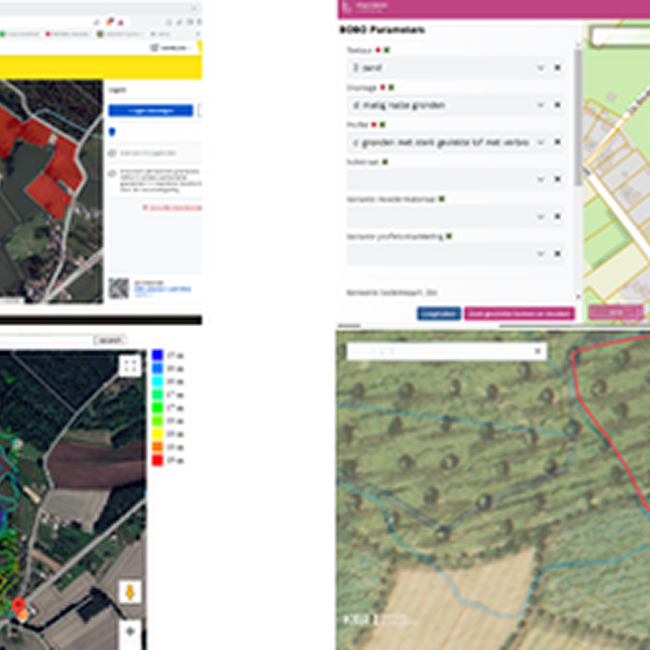
📷 What do you see in the image? During the preliminary investigation, we analyze elevation differences, soil types, plot boundaries, and environmental factors. We use handy online tools like Geopunt, Walonmap, and BOBO soil maps for this. Google Earth and Google Maps also help us understand the broader context of a site.
💡 Pro tip 1: Don’t just consider what’s already there, but also who benefits from it. What functions should the food forest fulfill? Production, biodiversity, education? Each objective requires different design choices and sometimes even a different location.
✨ During our course we take this first step seriously. A thorough preliminary study lays the foundation for a resilient, productive, and future-proof food forest. We take this first step seriously. A thorough preliminary study lays the foundation for a resilient, productive, and future-proof food forest.
Follow this series of tips and discover how we work step by step from idea to reality.